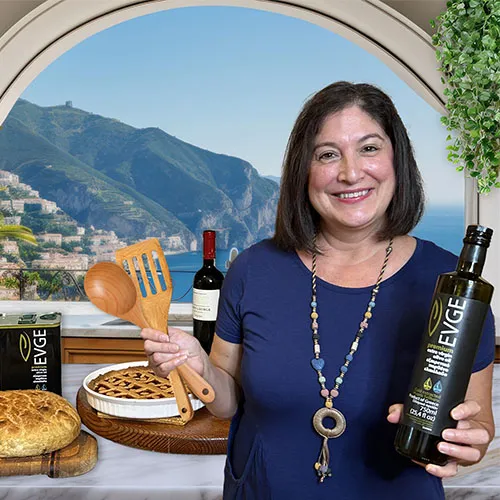
Hi, I'm Carol
I fell in love with Greece the moment I stepped off the plane at nineteen. Her beauty drew me in, and her people and culture enchanted me. The food? That took a little longer.
My Story
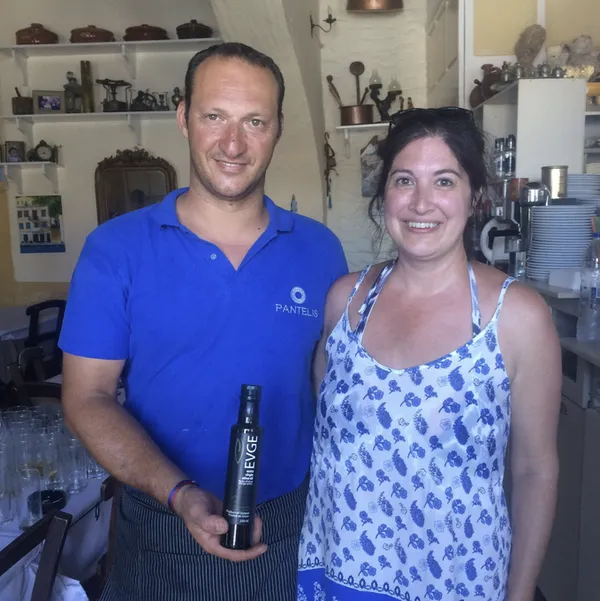
Symi, 2016
I grew up in a typical American household. My favorite meals were hamburgers, hot dogs, pizza, and all kinds of fast food. My mother cooked most nights, usually some type of meat or shrimp, a "casserole" version of a vegetable baked with cream soup, cheese, and buttered Ritz crackers, and maybe a green salad with bottled dressing. The healthiest vegetable dish I ate was green beans cooked with bouillon cubes.
So when I arrived in Greece for the first time, I stuck to what felt safe: Greek fast food. I discovered souvlaki, grilled pork wrapped in pita bread with tzatziki and fries on the side. Since I refused to eat raw onion or tomato back then, I ordered mine plain. It was so good that I ate it every single night for two weeks. Breakfast was cheese pie and chocolate milk. Not exactly the Mediterranean diet.
But something about Greece kept pulling me back. Each trip, I got a little braver. I tried the tomatoes. Then the olive oil. Then the slow-cooked ladera vegetables that I once would have pushed around my plate. But it wasn't until I met Yiayia Kikitsa when I finally stopped being a tourist and really learned how Greeks actually eat and live.
Yiayia Kikitsa
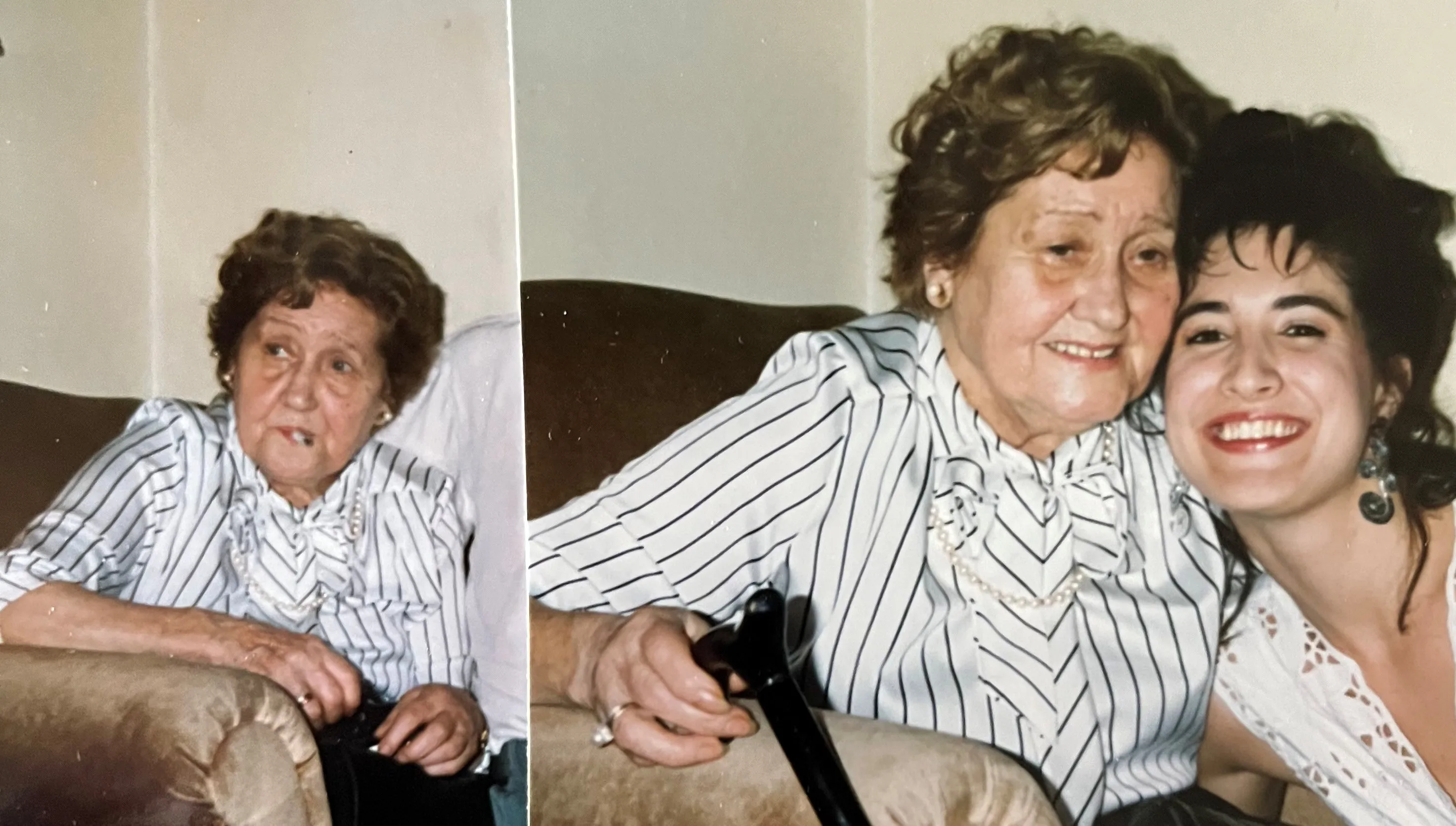
With Yiayia Kikitsa in Athens
Everything changed when I moved to Greece at twenty-two. My vegetable repertoire had only slightly expanded to include fried zucchini and eggplant, and most days I lived on pasta and souvlaki.
Within my first year, I met the man who would later become my husband. I was scraping by teaching English, and he was a poor medical student. Neither of us knew how to cook, so we ended up eating almost every day at his grandmother's apartment in downtown Athens.
Yiayia Kikitsa, as everyone called her, was not your typical Greek grandmother. She was born into a prominent Athenian family — something she was quite proud of — and had never had to do any work beyond keeping house, organizing card games, and hosting family gatherings. She didn't particularly love cooking, but she did it out of habit and necessity.
She was ninety when I met her: fiercely independent, strong-willed, and in remarkably good health. She smoked two packs a day and took only the occasional Valium "for her nerves." She loved having company, so she cooked for us daily.
Yiayia followed the Mediterranean diet instinctively. Vegetable dishes simmered in olive oil — known as ladera — were the main course three or four times a week, served with bread and feta on the side. Once or twice a week she made legumes — lentils, beans, or black-eyed peas. Fish appeared once a week, and meat only on Sundays. Even then, it was never the centerpiece: pork with celery, stuffed zucchini, moussaka, or chicken cooked in tomato sauce. Grilling was reserved for celebrations and holidays like Easter.
We arrived at her apartment each day absolutely starving, and she would serve a simple one-pot vegetable dish with feta, olives, and bread. I had no choice but to try new things — and to my surprise, I loved every single one. Slowly, I fell in love with all vegetables, legumes, and even sardines.
Without realizing it, I was learning the true Mediterranean way of eating — and loving every bite.
Simple Food, Powerful Nutrition
Yiayia was not one to slave over a stove. She rarely spent more than twenty or thirty minutes cooking. She used frozen vegetables, canned tomatoes, and always plenty of extra-virgin olive oil — the only oil in a Greek kitchen. Sometimes she used fresh or canned vegetables when frozen ones weren't available — artichokes, cauliflower, zucchini, eggplant, or potatoes.
Even though I usually prefer using fresh and seasonal produce, Yiayia's shortcuts proved something important: cooking delicious, satisfying, vegetable-centered meals can be fast, easy, and deeply nourishing.
What neither of us knew then was that her way of eating was exceptionally high in polyphenols — plant compounds that act as antioxidants and have anti-inflammatory properties. Polyphenols protect against chronic disease and promote long-term health and vitality. Her traditional Greek diet, built around vegetables, legumes, herbs, and extra-virgin olive oil, naturally delivered hundreds of milligrams of these powerful compounds every single day.
Bringing the Mediterranean Table Home
Years later, circumstances brought me back to Columbia, South Carolina, where I was born and raised. After living in Greece for twenty years, surrounded by olive trees and family tables overflowing with food, I realized there was nothing like it here. There were no real Mediterranean take-out or delivery options — nothing that captured that rustic, nourishing simplicity I had come to love.
So, in 2014, I started Ambrosia LLC from my kitchen — cooking the healthy, plant-forward Greek dishes I missed the most. The following year, when I couldn't find the kind of olive oil I was used to in Greece, I began importing it myself from Diodia, a small village on the slopes just north of Kalamata in the Peloponnese. That oil became EVGE, and it remains the only olive oil I use — in my cooking, in my home, and in every dish I make.
From My Kitchen to Yours
For over 10 years (2014-2025), I ran Ambrosia, my successful home-based dinner pick-up, delivery, and dinner party catering service. Real people — clients who became friends — loved these dishes and paid me well to cook for them. People are still asking me to cook for them, but the time has come to teach my methods so you can always have delicious and healthy meals following the Mediterranean diet — the way of eating that tradition and science have proven best for physical and mental wellbeing and longevity.
Now I want to share my recipes with everyone. These aren't just recipes from cookbooks — these are dishes I've tweaked and perfected over years of cooking for paying clients who kept coming back for more. I want you to see how easy Greek food is to make, and how delicious and healthy eating can be every day.
What I Do Now
I write about food, but it's never just recipes. It's about understanding why Greeks eat this way, and how you can bring those habits into your own kitchen, wherever you live.
I also help people experience Greece the way I've come to know it: the hidden villages, the family tavernas, the olive groves, and that slow pace of island life that changed everything for me.
What I Offer
The Greek Way
Deep dives into the Greek Mediterranean diet and lifestyle. What it really means and how to make it work for you.
ExploreGreek Kitchen
Authentic Greek recipes you can make at home. Simple ingredients, clear instructions, real food.
See RecipesTravel Greece
Experience Greece like a local, not a tourist. Custom itineraries and insider knowledge.
Plan a TripEVGE Olive Oil
EVGE (εύγε) means "bravo!" in Greek — praise for something done exceptionally well.
John Papageorgiou founded EVGE in 2012 after searching Greece for truly exceptional olive oil. Free from any inherited family grove, he chooses purely on quality — Koroneiki olives from Messinia, cold-pressed within hours of harvest. I partnered with him to bring it to the US. Cook with it once, and you'll understand why Greeks don't drizzle olive oil — they pour it.
Shop EVGEBe My Guest in Greece
After years of helping friends plan their trips to Greece, I started Be My Guest. I help travelers skip the tourist traps and find the places I actually love: the village tavernas, the hidden beaches, the spots where locals go on Sunday.
Plan Your Trip