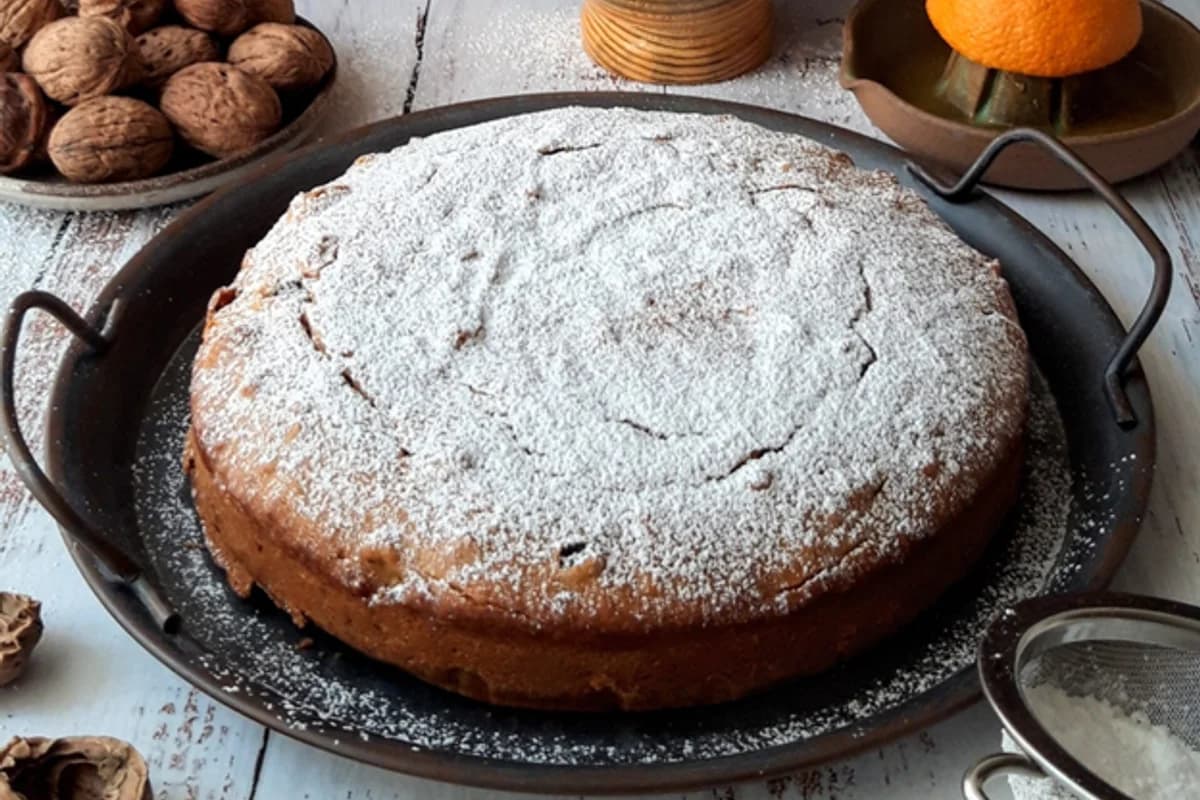
Fanouropita (Saint Fanourios Cake)
EverydayA fragrant vegan olive oil cake made with orange, wine, and warm spices. Traditionally baked on August 27 to honor Saint Fanourios.
Fanouropita (Saint Fanourios Cake)
A fragrant vegan olive oil cake made with orange, wine, and warm spices. Traditionally baked on August 27 to honor Saint Fanourios.
1Ingredients
- 280g (1 1/4 cups) EVGE extra virgin olive oil
- 290g (2 1/3 cups) powdered sugar
- 110g (1/2 cup) sweet red wine or brandy (Metaxa 5 star)
- 330g freshly squeezed orange juice
- Zest of 2 oranges
- 1 tsp baking soda
- 1 tsp baking powder
- 1 tsp cinnamon
- 1/2 tsp ground cloves
- 500g (4 cups) all-purpose flour
2Instructions
Not only is Greece the land of gorgeous destinations, but it is also the land of festivals and feasts. Each town and village has its own patron saint, and each saint has its feast day with much food, drink, music and dancing in the central square. Most Greeks are named after these saints and will feast on their name-days, which are more important than birthdays — because everyone knows your name!
On August 27, there is a unique saint's day: Agios Fanourios.
The Legend of Saint Fanourios
I learned about this saint and the special cake — Fanouropita — made on the eve of his day while I lived on the beautiful island of Skiathos (1995-1996). Saint Fanourios is said to reveal (faneronei in Greek) things hidden or lost.
In Skiathos, one tradition was for unmarried girls to put a piece beside their pillow so that their future husband would be revealed. I, however, had already been engaged and was planning my wedding on the island the following summer (1996), so I ate my piece instead — it was delicious!
As the story goes, Saint Fanourios' mother was a sinner, loved only by her son. Never showing remorse for her sins, after her death, the mother was sent to hell, but that didn't change Saint Fanourios' wish to save her soul.
Fanouropita is baked not as a tribute to the saint, but in memory of his mother. Before eating a piece, you should say the prayer "God forgive the mother of Saint Fanourios" (Θεός σχωρέσει τη μάνα του Αη Φανούρη). As a thank you, the saint will bring back something that you have lost.
The origin of the legend is unknown — very little is actually known about Saint Fanourios, whose icon was first found on the island of Rhodes on August 27, circa 1500 AD. Nonetheless, the tradition of blessing fanouropitas has been embraced by the church and the orthodox community.
The Sacred Numbers
The cake traditionally consists of seven or nine ingredients, symbolizing the sacred mysteries (sacraments) of the church. I heard that if you make it with 7 ingredients, the saint will reveal what you ask, but if you make it with 9, he will perform miracles!
There are many versions, but olive oil, flour, and sugar are the basic ingredients, and orange is a common flavor. Many recipes include raisins and chopped walnuts. This version uses brandy and warm spices.
A Vegan Cake
This is a vegan cake — it was originally made by monks. There are quite a few vegan sweets and dishes in Greek cuisine, as pious Greeks fast around 180-200 days per year. During fasting, they eat absolutely no products from animals with red blood — no products from land animals or fish. The exceptions are mollusks and shellfish, whose blood is not red.
The Method
-
Preheat oven to 350°F (convection).
-
In a mixing bowl, put the olive oil, sugar, orange zest, cinnamon, and cloves. Whisk together until well mixed and creamy.
-
Add the wine or brandy and mix well.
-
Dissolve the baking soda in the orange juice (use a tall pitcher over the mixing bowl — it will rise and bubble when mixed). Add to the other liquids and mix.
-
Mix the baking powder with the flour and add to the liquid mixture, stirring just until the flour has been absorbed and it resembles a thick batter. Be careful not to over mix.
-
Pour batter into a lightly oiled 9x11 pan.
-
Bake for 50 minutes, or until a toothpick comes out clean from the center.
-
Wait until completely cooled to cut.
If You Bring It to Church
If you bake a fanouropita and bring it to church, know that you should share it with the parishioners — at least seven pieces should be handed out at the church.
The fanouropita can be made at other times of the year, especially if you want to ask the saint to help you find something.
Kali Epitychia!
3Tips & Notes
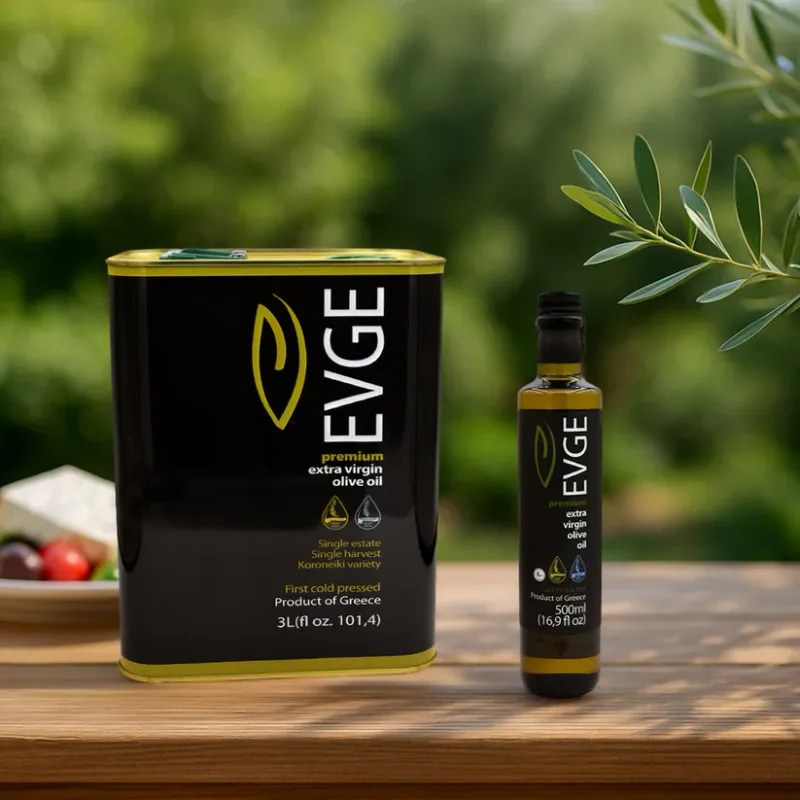
A Note on Olive Oil
For authentic results, use a high-quality extra virgin olive oil — and don't be shy with it. Greeks pour, not drizzle.
Shop EVGE Olive OilGet More Greek Recipes
Join thousands of home cooks getting authentic Greek recipes delivered weekly.
No spam, ever. Unsubscribe anytime.