Vasilopita (New Year's Cake)
WeeklyA fragrant olive oil cake cut at midnight on New Year's Eve. Whoever finds the hidden coin enjoys luck all year!
Vasilopita (New Year's Cake)
A fragrant olive oil cake cut at midnight on New Year's Eve. Whoever finds the hidden coin enjoys luck all year!
1Ingredients
- 325g (1 1/2 cups) EVGE extra virgin olive oil
- 400g (2 cups) sugar
- Zest of 2 oranges and 1 lemon
- 150g juice from the zested oranges
- 50g juice from the zested lemon
- 120g (1/2 cup) milk
- 1 1/2 tsp vanilla
- 4 eggs
- 750g (6 cups) flour
- 2 tsp baking powder
- 1 tsp cinnamon
- Dash of salt
- 1 coin wrapped in foil
2Instructions
Vasilopita — or St. Basil's pita — is cut at midnight as the year changes with family. It is called Vasilopita because Saint Vasilis (or Basil) is celebrated on January 1 (along with anyone named Vasilis or Vasiliki).
St. Basil of Caesarea (330-379AD) was the original Santa. He was from a wealthy family and legend has it that after becoming a monk, he would leave gifts and food on the doorsteps of poor families at Christmas time.
The Tradition
There is not a standard recipe for Vasilopita — each family seems to have their own version. However, there is a politiki version (from the Poli or City, which is Constantinople or Istanbul), which is more like tsoureki — a sweet yeast bread made with milk, butter, eggs and aromatics.
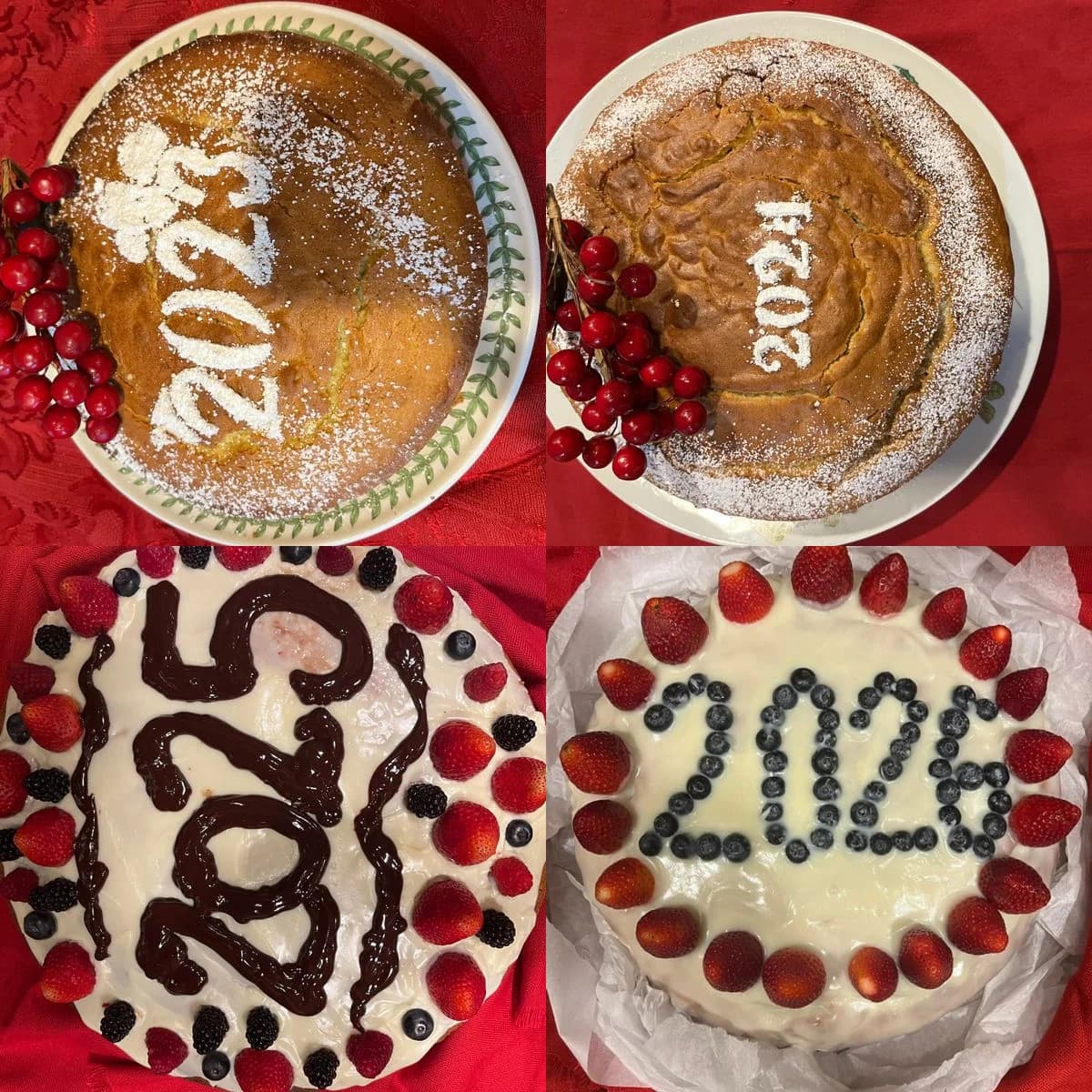
What essentially makes it "Vasilopita" is the coin (flouri) baked inside and the year written on the cake, usually using powdered sugar, chocolate, almond slices, or whatever inspires you!
Cutting the Cake
The cake is always sliced at midnight — the first moment of the new year. The whole cake must be cut and each household can slice as they please.
Traditionally:
- The first piece is for Christ
- The second for St. Basil
- The third for the less fortunate
- Then a piece is cut for all members of the family and any friends present
The vasilopita is always offered first to the oldest person present, down to the youngest. And whoever has the coin (flouri) in their slice will enjoy luck all year!
This cake can be made and cut up until even March! It's a tradition that marks good will and blessings for the new year, not only with family but in business as well — you see on the news in Greece that government officials or bishops are cutting the cake with various groups until almost spring!
Preparing the Pan
I use a 12-inch round springform pan, which I line with parchment cut to the size of the bottom and another strip cut to the dimensions of the side. This way it is super easy to remove the cake and decorate on your cake plate!
-
Preheat oven to 350°F (175°C).
-
Sprinkle oil and flour in the baking dish (or line with parchment as described above).
Making the Cake
-
Beat the olive oil, zest, and sugar for 2 minutes.
-
Add the other liquid ingredients (orange juice, lemon juice, milk, vanilla) and beat for another minute.
-
Add the eggs one at a time and beat another minute.
-
Combine the dry ingredients (flour, baking powder, cinnamon, and salt).
-
Add the dry ingredients and beat until just mixed.
-
Pour into baking pan.
-
Don't forget the coin! Wrap it in foil and press it into the batter so nobody knows where it is.
-
Bake for 60 minutes or until a toothpick comes out clean and the top is golden.
Decorating
When the cake is done, the new year must be written on top. Traditionally this is done with:
- Powdered sugar (stenciled through a template)
- Melted chocolate
- Almond slices
- In the yeast "Politiki" version, some of the dough itself
Or use whatever inspires you — blueberries, fresh fruit, sprinkles!
Why Olive Oil?
This cake uses olive oil instead of butter, making it incredibly moist and fragrant. The citrus and cinnamon complement the fruity notes of good extra virgin olive oil perfectly. It's a lighter cake than butter-based versions, perfect for a light dessert or to accompany hot beverages during the winter.
The cake I prefer is incredibly easy and fast to make. It always comes out delicious, moist, and perfect.
Kali Epitychia, Kali Orexi — Good Luck, Good Appetite — and ENJOY!
3Tips & Notes
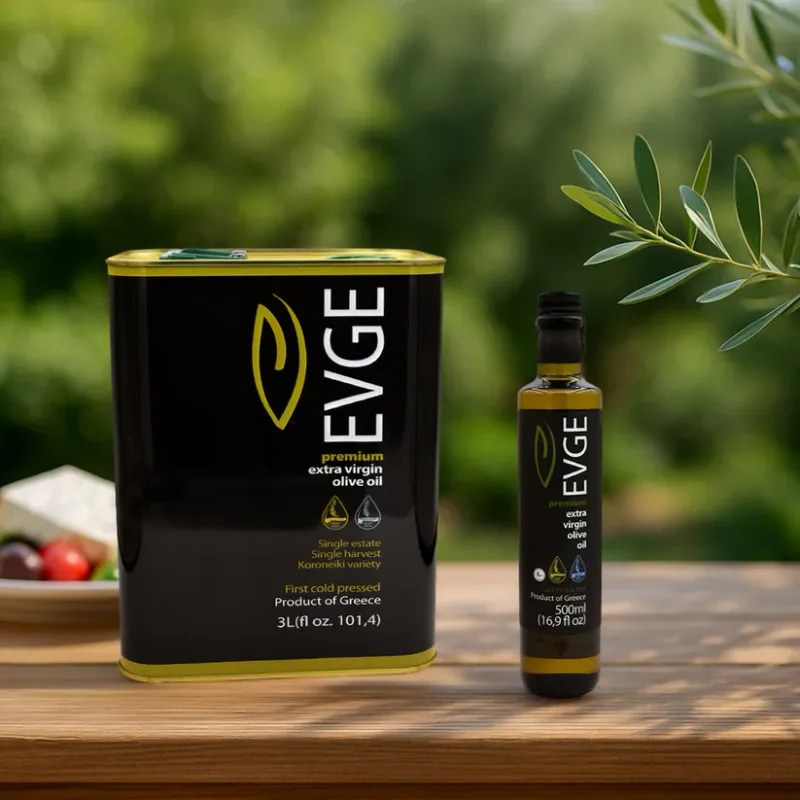
A Note on Olive Oil
For authentic results, use a high-quality extra virgin olive oil — and don't be shy with it. Greeks pour, not drizzle.
Shop EVGE Olive OilGet More Greek Recipes
Join thousands of home cooks getting authentic Greek recipes delivered weekly.
No spam, ever. Unsubscribe anytime.