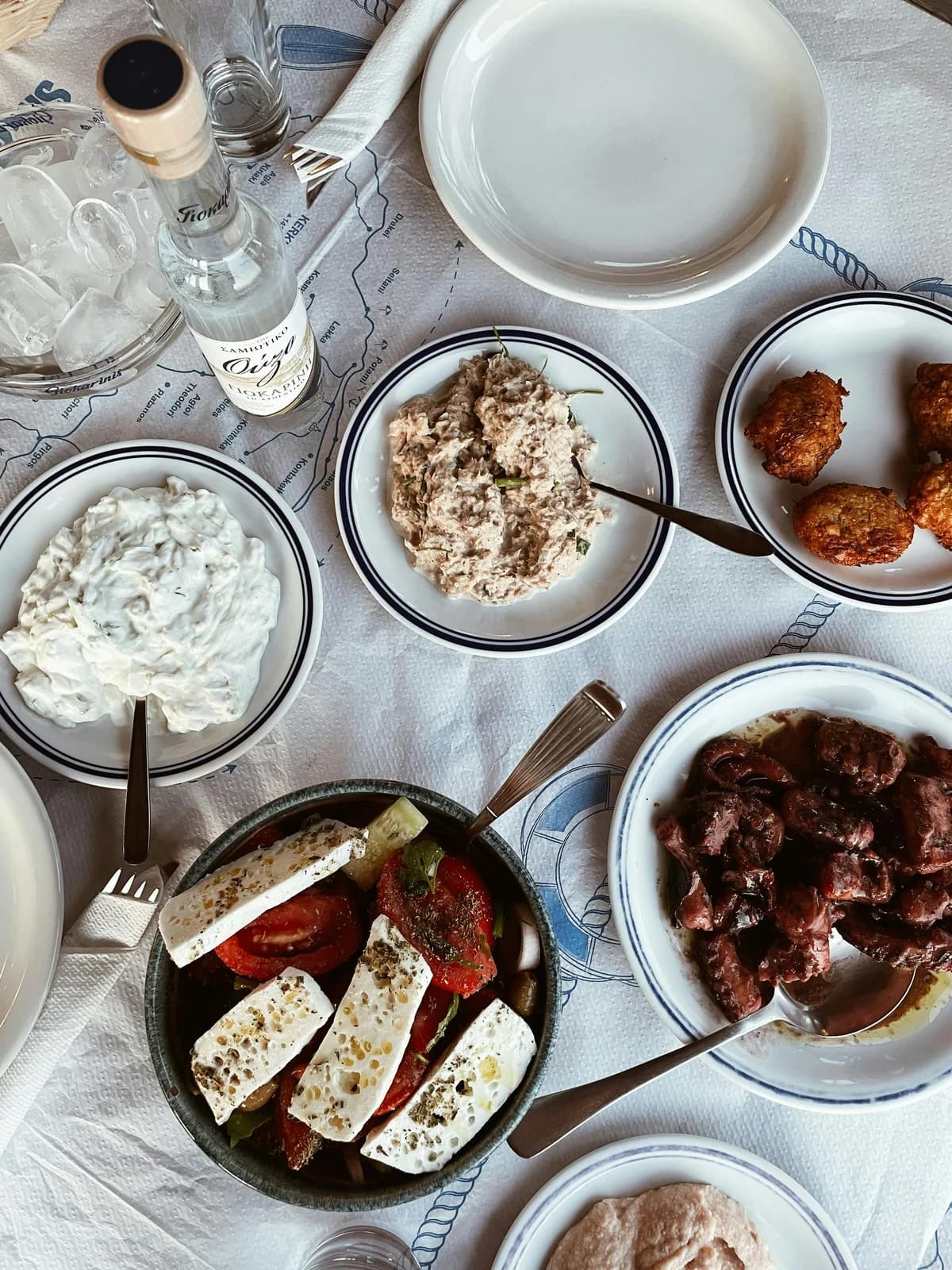
The Greek Mediterranean Food List
A complete guide to what Greeks actually eat — the foods that form the foundation of the Mediterranean diet.
January 15, 2024
The Mediterranean diet wasn't created in a lab. It was discovered by researchers who studied what Greeks — particularly those in Crete — actually ate. Here's that food list, organized by how often these foods appear in traditional Greek eating.
Daily Foods (Every Day)
These are the foundation. Greeks eat these foods every single day:
Olive Oil Not a drizzle. A pour. Greeks consume more olive oil per capita than any other country — roughly 20 liters per person annually. It's used for cooking, dressing, dipping, and finishing.
Vegetables Tomatoes, cucumbers, peppers, onions, garlic, leafy greens, zucchini, eggplant. These aren't sides in Greece — they're often the main course. Lathera (vegetables cooked in olive oil) might be dinner three nights a week.
Bread Good, crusty bread is on every Greek table. It's used to soak up olive oil, scoop up salads, and accompany every meal.
Herbs Oregano, thyme, rosemary, dill, parsley, mint. Greeks use fresh and dried herbs liberally. Wild greens (horta) gathered from hillsides are a staple.
Fruits Seasonal fruits for dessert. Figs, grapes, oranges, melons, pomegranates, cherries — whatever's ripe.
Several Times a Week
Legumes Lentils, chickpeas, white beans, fava beans. Greeks eat legumes 2-4 times per week. Fasolada (bean soup) is practically a national dish.
Nuts and Seeds Walnuts, almonds, pistachios, sesame seeds. As snacks, in salads, or ground into sauces.
Cheese Feta, of course. But also graviera, kefalotyri, and fresh cheeses. Used to accent dishes, not as the main protein.
Yogurt Thick Greek yogurt with honey for breakfast or dessert. Also used in sauces and dips.
A Few Times a Week
Fish and Seafood Grilled fish, sardines, anchovies, octopus, shrimp. In coastal areas, fish appears 2-3 times weekly.
Eggs Often in dishes rather than on their own. Used in baking, omelets, and traditional pies.
Occasionally
Poultry Chicken is more common than red meat, but only once a week.
Red Meat Lamb, goat, pork, beef — traditionally reserved for special occasions, celebrations, and Sunday meals. Maybe 2 or 3 times per month or less.
Sweets Honey-based desserts, baklava, cookies — enjoyed but not daily. The sweetest thing most Greeks eat regularly is fresh fruit.
What's Missing?
Notice what's not on this list:
- Processed foods
- Refined sugars
- Seed oils (corn, canola, etc.)
- Fast food
- Packaged snacks
The Greek Mediterranean diet is about eating REAL food, and mostly plants.
The Pattern, Not Just the Foods
It's not enough to stock your kitchen with these foods. The pattern matters:
- Vegetables and olive oil are the center, not the side
- Animal protein is an accent, not the main event
- Meals are social, slow, and shared
- Snacking is minimal — people eat meals
This isn't a diet in the modern sense. It's a way of eating that developed over centuries in a culture that valued good food, shared meals, and the olive tree.
Start where you are. Add more vegetables. Pour more olive oil. Eat beans at least twice a week and more is even better. That's the traditional Greek way.
Want More Greek Wisdom?
Get weekly insights on Greek food, lifestyle, and travel delivered to your inbox.
No spam, ever. Unsubscribe anytime.