The Ionian Islands: Greece's Green Paradise
Green hills meeting turquoise waters. Venetian architecture and some of Greece's best seafood.
January 9, 2025
The Ionian Islands don't look like the rest of Greece. Where the Cyclades are rocky and white, the Ionians are lush and green — covered in olive groves, cypresses, and wildflowers.
Four centuries of Venetian rule left their mark here. You'll see it in the architecture, taste it in the food, and hear it in the local music. This is Greece with an Italian accent.
The Islands
Corfu (Kerkyra): The most famous and most developed. The old town is a UNESCO World Heritage site — Venetian fortresses, French arcades, British cricket pitches. Beyond the town, olive groves stretch for miles.
Kefalonia: The largest Ionian island, with dramatic mountains, the famous Myrtos Beach, and excellent local wines. The 2001 film "Captain Corelli's Mandolin" was filmed here.
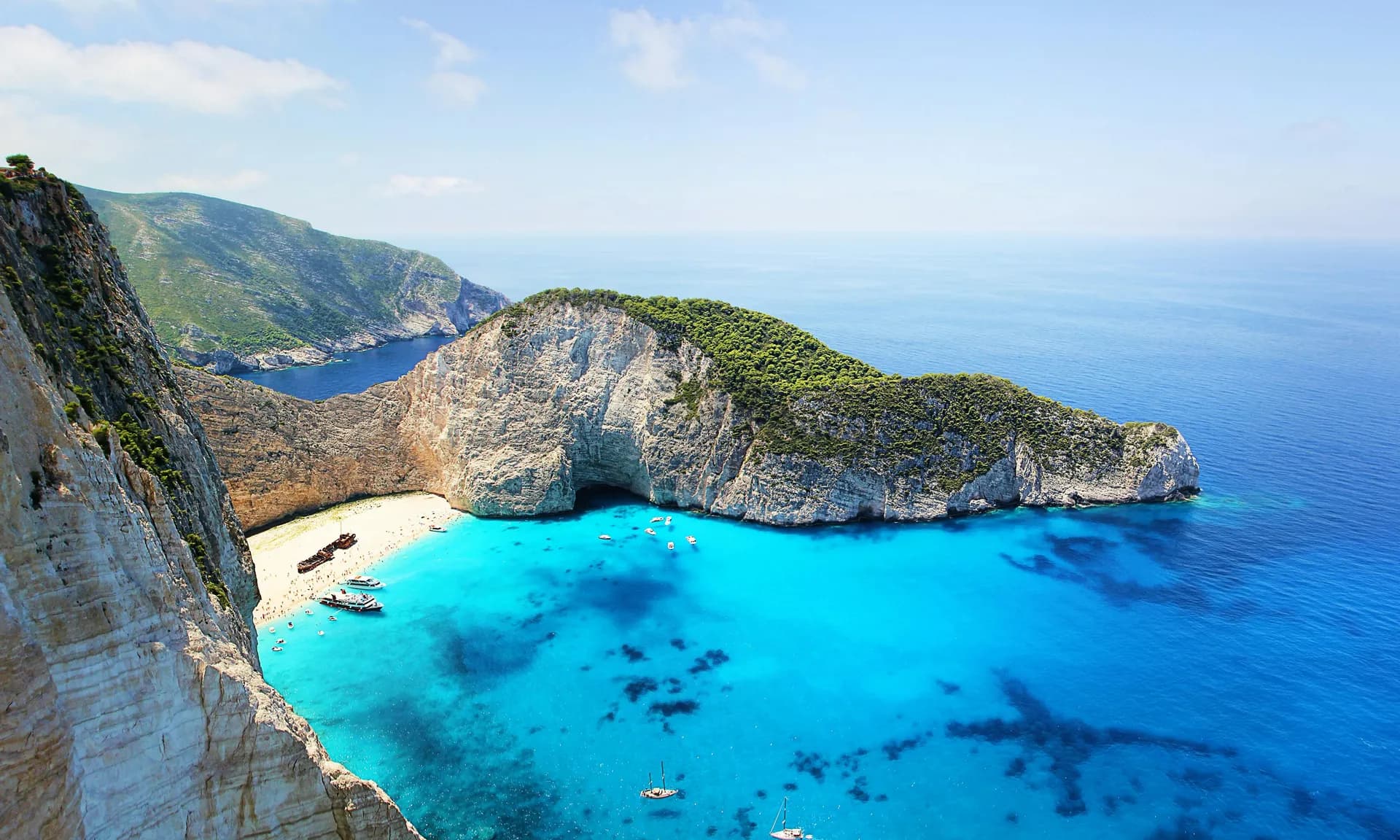
Zakynthos (Zante): Known for Navagio Beach (Shipwreck Beach) — one of the most photographed spots in Greece. The north is peaceful; the south is party central.
Lefkada: Connected to the mainland by a bridge, making it easy to reach. Stunning beaches on the west coast, including Porto Katsiki.
Paxos and Antipaxos: Tiny, exclusive, and beautiful. Old olive groves, turquoise coves, and excellent tavernas.
Ithaca: Odysseus's homeland. Small, quiet, and steeped in mythology. Perfect for those who want to escape.
The Venetian Legacy
Unlike the rest of Greece, which was under Ottoman rule, the Ionian islands were Venetian for 400 years. This changed everything.
The architecture is different — look for the kantounia (narrow lanes), the ornate balconies, and the pastel-colored buildings.
The music is different too — the Ionians are famous for kantades, Italian-influenced serenades sung in four-part harmony.
And the food has its own character.
Ionian Food
The Venetian influence shows on the table.
Pastitsada: Braised meat (usually beef or rooster) in a rich tomato sauce with pasta. Corfu's signature dish.
Sofrito: Thin slices of beef cooked with garlic and white wine. Another Corfu specialty.
Bourdeto: Spicy fish stew, often made with scorpion fish. A Corfu classic.
Strapatsada: Scrambled eggs with tomatoes — simple and delicious.
Mandolato: Nougat candy, reflecting the Italian connection.
The Ionians also produce excellent olive oil and wine. Robola from Kefalonia is particularly notable.
The Beaches
The Ionian Sea is calmer than the Aegean, and the beaches reflect this — often pebbled, always with that extraordinary turquoise water.
Navagio Beach (Zakynthos): The famous shipwreck beach, only accessible by boat.
Myrtos Beach (Kefalonia): Dramatic white cliffs and deep blue water.
Porto Katsiki (Lefkada): Stunning cliffs and turquoise sea.
Paleokastritsa (Corfu): Multiple bays with clear water, backed by green hills.
When to Visit
The Ionians have a gentler climate than the Aegean islands — more rain in winter means greener landscapes in summer.
May-June: Green and beautiful, before the summer crowds.
July-August: Hot and busy, but everything is open.
September-October: Still warm, less crowded, olive harvest begins.
Getting There
Corfu and Kefalonia have international airports with summer flights from across Europe.
Zakynthos also has an airport with seasonal connections.
Ferries run from mainland ports (Igoumenitsa, Patras, Kyllini) to most islands.
Lefkada is connected by bridge — you can drive there from Athens.
My Recommendations
The Ionians offer a different side of Greece. Come for the beaches, stay for the food, and let the gentle pace of island life work its magic.
Planning an Ionian Trip?
Start with my guide to Corfu, where Venice meets Greece — the old town, the north coast, and the tavernas worth the drive.
If you'd like the whole journey arranged — routes, stays, boats — that's what I do at Be My Guest in Greece.
Want More Greek Wisdom?
Get weekly insights on Greek food, lifestyle, and travel delivered to your inbox.
No spam, ever. Unsubscribe anytime.